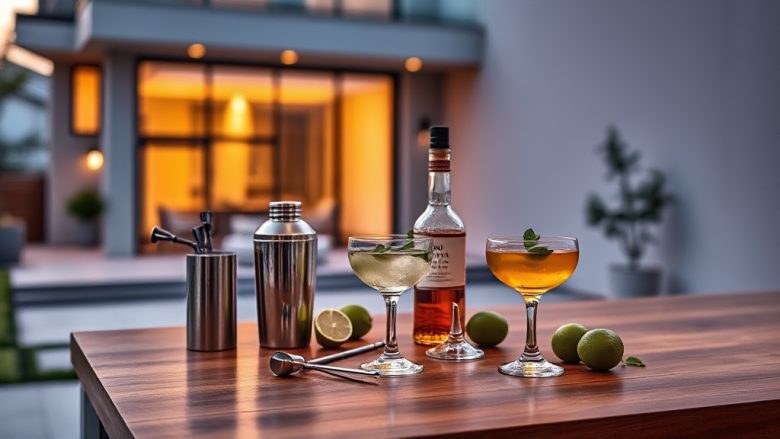
Making cocktails at home is one of those small pleasures that pays you back immediately. You shake something cold, pour it into a glass, hand it to a friend, and watch their eyebrows lift. Nobody needs a chrome bar cart or a wall of obscure bottles to get there. A step by step guide to home cocktails really comes down to a handful of tools, three or four techniques, and a willingness to taste as you go.
That’s the whole secret. The drinks that impress people most are usually the simple ones made properly: a daiquiri with the right balance of sweet and sour, a negroni stirred long enough to chill, a highball with fresh soda and plenty of ice. This step by step guide to home cocktails walks through equipment, technique, three beginner-friendly recipes, and the small adjustments that turn a decent drink into a great one.
What Equipment You Actually Need to Start
The internet will happily sell you a twelve-piece bartending kit with tools you’ll never touch. Ignore most of it. For your first year of home bartending, five things matter, and you can assemble the whole set for less than the price of two rounds at a decent bar.
A shaker is the first purchase. A Boston shaker, which is a metal tin plus a slightly smaller tin or glass that nests inside it, is what most working bartenders use because it’s fast and easy to clean. A cobbler shaker with a built-in strainer is friendlier for beginners and completely fine. Either works.
Next, a jigger. Measuring by eye is a skill you’ll develop later, but early on it’s the fastest way to ruin a drink. A double-sided jigger with a half-ounce side and a one-ounce side covers nearly every classic recipe. If a recipe calls for three-quarters of an ounce, use the half plus a splash from the small side. Precision beats guesswork when you’re learning.
A bar spoon, which is a long-handled spoon with a twisted stem, handles stirring and layering. A fine-mesh strainer catches ice shards and fruit pulp when you pour. And a decent knife and small cutting board take care of citrus, which you’ll be cutting constantly.
Glassware can wait. Start with what you own: a couple of tumblers, a wine glass or two, and any tall glass you can find. Ice matters more than glass. Buy bagged ice or make it in trays and use more than you think you need, because a half-filled glass of ice melts fast and waters down the drink.
The Core Techniques Behind Every Good Drink
Almost every cocktail you’ll make uses one of three methods: shake, stir, or build. Learning when to use each one is where home bartending stops feeling like following instructions and starts feeling like cooking.
Shake when the drink contains citrus, dairy, egg white, or syrup that needs to blend. Shaking aerates the liquid, chills it fast, and adds a light frothy texture. Fill the shaker about two-thirds with ice, pour in your ingredients, seal it, and shake hard for ten to fifteen seconds. You should feel the tin get painfully cold. That’s your signal to stop.
Stir when the drink is all spirits, like a martini, a negroni, or a Manhattan. Stirring chills the drink and dilutes it gently without adding air. Fill a mixing glass or a pint glass with ice, add the ingredients, and stir with the bar spoon for about twenty to thirty seconds. The goal is a drink that’s cold and slightly softened, not watery. If you stir for five seconds, you’ll taste the difference immediately: harsh and warm.
Build when the drink goes straight into the serving glass, like a gin and tonic, a whiskey highball, or a mojito. Add ice first, then the spirits, then the mixer, and give it a quick stir with a bar spoon. Building is the easiest method and the one most beginners get wrong by adding ice last. Ice first keeps the drink cold from the bottom up.
One more technique worth practicing: the dry shake. If a recipe calls for egg white, shake the ingredients without ice first for fifteen seconds, then add ice and shake again. The first shake builds the foam, the second chills it. It looks impressive and costs nothing extra.
Three Easy Cocktails to Practice Tonight
These three cover the main techniques and use ingredients you can find in any supermarket. Make each one twice. The second attempt will be noticeably better.
The Daiquiri. Two ounces of white rum, three-quarters of an ounce of fresh lime juice, and three-quarters of an ounce of simple syrup. Shake hard with ice and strain into a chilled coupe or a small tumbler. That’s it. It’s sour, bright, and clean, and it teaches you what balance tastes like. If you only have bottled lime juice, use it, but fresh lime is worth the two minutes of squeezing.
The Negroni. One ounce of gin, one ounce of sweet red vermouth, and one ounce of Campari. Stir with ice for thirty seconds and strain over a large ice cube in a tumbler. Garnish with a strip of orange peel if you have an orange. This drink is bitter and bold, and it’s a great test of your stirring technique. If it tastes thin, you stirred too little. If it tastes watery, too long.
The Whiskey Highball. Two ounces of bourbon or rye, four to five ounces of cold soda water, and a tall glass packed with ice. Add the whiskey, top with soda, and stir once gently. Squeeze in a lime wedge if you like. This is the easiest drink on the list and the one most likely to become a weeknight habit. Use cold soda and lots of ice and it’ll taste like a proper bar pour.
Simple syrup is the one ingredient worth making yourself. Combine equal parts sugar and hot water, stir until the sugar dissolves, and keep it in the fridge for a few weeks. It costs pennies and improves every drink that calls for it.
How to Balance Flavors Without a Recipe
Once you understand the basic structure of a cocktail, you can start improvising. Most classic drinks are built on a simple formula: a base spirit, a sweet element, and a sour or bitter element. A margarita is tequila, orange liqueur, and lime. A whiskey sour is whiskey, syrup, and lemon. Learn the pattern and you can make a decent drink out of whatever’s in your cupboard.
Taste as you build. Before you shake or stir, dip a clean spoon into the mixture and try it. If it’s too sharp, add a quarter-ounce more syrup. If it’s too sweet, add a squeeze more citrus. If it tastes flat, a tiny pinch of salt can wake it up. Bartenders do this constantly, and it’s the single habit that separates a drink that’s fine from one that’s memorable.
Dilution is an ingredient, not a mistake. Ice melts, and that meltwater is part of the recipe. This is why shaking and stirring times matter. A drink that sits too long becomes watery; a drink that’s under-diluted tastes harsh and alcoholic. When you’re learning, aim for a drink that tastes smooth and slightly softer than the raw ingredients suggest.
Keep your ratios in mind. A common starting point is two parts spirit, one part sweet, one part sour. Adjust from there. If you’re using a strong-flavored spirit like mezcal or an aged rum, dial the sweet element back slightly. If you’re using a mild spirit like vodka, you can afford a little more sweetness.
Presentation Ideas That Make It Feel Special
A good drink tastes better when it looks like someone cared. You don’t need fancy glassware or a blowtorch. A few small touches go a long way.
Chill your glasses. Pop them in the freezer ten minutes before you pour, or fill them with ice water while you shake. A cold glass keeps the drink cold longer and stops the ice from melting instantly.
Use one big ice cube for stirred drinks. A single large cube melts more slowly than a handful of small ones, so your negroni or old fashioned stays strong to the last sip. You can buy silicone trays cheaply, or just use one large cube from a tray and break it down if needed.
Garnish with intention. A strip of citrus peel twisted over the glass releases oils that hit the nose before the first sip. A lime wheel on the rim of a highball looks tidy. A sprig of mint slapped between your palms, not muddled, sits on top of a drink and adds aroma without turning bitter. Even a simple orange peel makes a drink look deliberate.
Finally, serve with a small glass of water or a bowl of nuts nearby. It sounds trivial, but it makes the whole thing feel like an occasion rather than a quick pour. The point of home cocktails isn’t to replicate a bar. It’s to make an ordinary evening feel a little more considered, one drink at a time.